Jharkhand Teacher Eligibility Test (JHTET or JTET) 2026 is the gateway for thousands of aspiring teachers in Jharkhand. One of the most important yet often confusing aspects is the language options. Whether you are targeting primary (Class 1-5) or upper primary (Class 6-8) teaching posts, understanding Language I and Language II can make or break your score.
The Jharkhand Academic Council (JAC) has released the official 2026 syllabus, and the language structure reflects Jharkhand’s rich linguistic diversity. Unlike other TET exams that offer limited choices, JHTET gives candidates strategic flexibility in Language II while keeping Language I more structured. This blog breaks down everything you need to know — from exact options and exam patterns to syllabus details, selection tips, and preparation strategies — so you can choose wisely and score high.
Why Language Options Matter So Much in JHTET 2026
Jharkhand is home to Hindi, Urdu, English, and over a dozen tribal and regional languages like Santhali, Ho, Mundari, Kurukh, and Nagpuri. The JHTET language sections are designed to test not just your command over languages but also your ability to teach in multilingual classrooms.
Language I checks your proficiency in the medium of instruction (Hindi/Urdu + English), while Language II evaluates your grasp of a regional language — crucial because many government schools in Jharkhand use local dialects as the medium of teaching. Choosing the right combination can give you a huge scoring advantage, especially if your mother tongue matches the regional language option.
According to the latest notification, both Paper 1 and Paper 2 carry 30 marks each for Language I and 30 marks for Language II. That’s 60 marks out of 150 purely from languages — almost 40% of the paper. Mastering these sections is non-negotiable for qualifying.
JHTET 2026 Exam Pattern: Where Languages Fit In
Here’s a clear table for quick understanding:
JTET Paper 1 (Classes 1-5) Exam Pattern
| Section | Subject | Questions | Marks |
|---|---|---|---|
| I | Child Development & Pedagogy | 30 | 30 |
| II | Language I | 30 | 30 |
| III | Language II (Regional Language) | 30 | 30 |
| Mathematics | 30 | 30 | |
| Environmental Studies (EVS) | 30 | 30 | |
| Total | 150 | 150 |
📚 CDT Notes & Free Online Tests
Enhance your exam preparation with our comprehensive Child Development Theory notes and real-time CBT mock tests:
- ➜
CDT Notes for TET (Complete Guide) - ➜
Piaget’s Theory CBT Mock Test - ➜
Kohlberg Moral Development Test (Hindi) - ➜
Erikson Psycho-Social Development MCQ
JTET Paper 2 (Classes 6-8) Exam Pattern
| Section | Subject | Questions | Marks |
|---|---|---|---|
| I | Child Development & Pedagogy | 30 | 30 |
| II | Language I | 30 | 30 |
| III | Language II (Regional Language) | 30 | 30 |
| IV | Mathematics & Science OR Social Studies OR Language Teacher/Other Teacher | 60 | 60 |
| Total | 150 | 150 |
Duration for both papers: 2 hours 30 minutes. No negative marking.
Language I in JHTET 2026: Structured but Strategic
Language I is not a free choice like in some other states. It is designed to test bilingual proficiency because most Jharkhand schools use Hindi or Urdu as the primary medium with English as a compulsory subject.
- For Assistant Teachers (Hindi medium): Hindi (15 questions) + English (15 questions)
- For Urdu Assistant Teachers: Urdu (15 questions) + English (15 questions)
This means every candidate attempting JHTET must be comfortable with English + either Hindi or Urdu. The questions are divided equally so you cannot skip one language.
What does the syllabus cover in Language I?
- Language comprehension and unseen prose passages (both Hindi/Urdu and English)
- Principles of teaching the language
- Framing questions (including Wh-questions)
- Development of language skills (listening, speaking, reading, writing)
- Comprehensive and Continuous Evaluation (CCE)
- Teaching-learning materials (TLMs)
- Pedagogy of language teaching
The questions are a mix of grammar, comprehension, and teaching methodology. If you are a Hindi-medium aspirant, focus heavily on Hindi pedagogy and English comprehension. Urdu-medium candidates should strengthen Urdu grammar alongside English.
Language II: The Real Choice – Regional Languages of Jharkhand
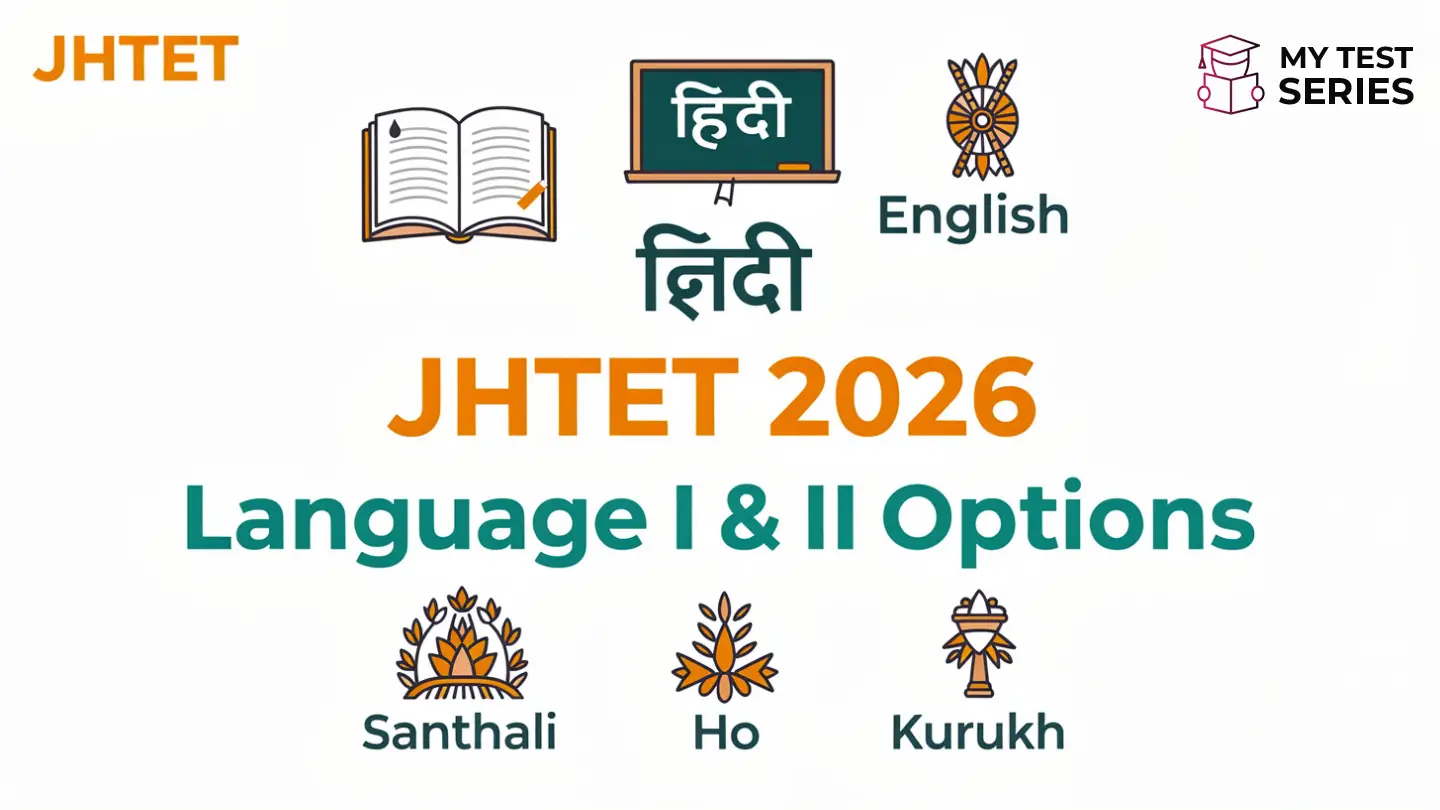
This is where your options open up. Language II is dedicated to one regional language of Jharkhand. The JAC provides a district-wise list of approved tribal and regional languages in the official syllabus annexure (usually Page 17 of the notification PDF).
Common Language II Options in JHTET 2026 (based on official references):
- Santhali
- Mundari
- Ho
- Kurukh (also called Kudukh or Oraon)
- Kharia
- Nagpuri
- Kurmali
- Bengali
- Odia (in select districts)
- Sanskrit (limited cases for certain language teacher posts)
Some candidates also get flexibility for other scheduled languages depending on their district and teaching post.
Pro Tip: Choose the language you studied in school or use daily. If you are from a Santhali-speaking area like Dumka or Pakur, selecting Santhali as Language II gives you a massive edge because the paper tests native-level proficiency.
How to Choose Your Language Options Wisely
- Check your medium of teaching: Hindi-medium posts → Hindi + English in Language I. Urdu-medium → Urdu + English.
- Verify district-wise list: The official notification has a clear annexure. Download it from jacexamportal.in and match your district.
- For Paper 2 Language Teachers: If you are applying as a language teacher (e.g., Santhali teacher), your Language II choice becomes even more critical.
- Sanskrit option: Available only in specific cases; confirm in the notification.
- Don’t guess: Wrong choice in Language II can lead to low scores because passages and pedagogy questions are language-specific.
Detailed Syllabus for Language Sections (2026)
Language I Syllabus (Hindi/English or Urdu/English)
- Unseen prose passage
- Principles of teaching English/Hindi/Urdu
- Development of language skills
- Framing questions
- Teaching-learning materials
- Comprehensive & Continuous Evaluation
- Pedagogy-specific topics like error analysis, vocabulary building, and lesson planning
Language II Syllabus (Regional Language)
- Language comprehension (unseen passages in the chosen regional language)
- Grammar and usage specific to that language
- Pedagogy of teaching the regional language
- Basic knowledge of sounds, phonetics, idioms, and literary terms (where applicable)
- Teaching methods and TLMs for tribal/regional languages
The syllabus is at Class 10+2 level, but pedagogy questions go deeper into classroom application.
Preparation Tips for Language Sections
- For Language I: Practice bilingual comprehension daily. Solve previous years’ Hindi-English and Urdu-English passages. Focus on pedagogy — 40-50% questions are teaching-oriented.
- For Language II: Read newspapers, folk stories, and textbooks in your chosen regional language. Santhali aspirants should practice Ol Chiki script if required. Create your own TLMs for practice.
- Time management: Allocate 25-30 minutes per language section during mock tests.
- Resources: Official JAC syllabus PDF, NCERT language books, and regional language grammar books (e.g., Santhali textbooks from JAC).
- Common mistakes to avoid:
- Ignoring pedagogy in favor of only grammar.
- Choosing a regional language you are not fluent in just because it “sounds easy.”
- Not checking the latest district-wise list.
FAQs on Language Options in JHTET 2026
Q1. Can I choose English as Language II? No. English is part of Language I only. Language II is strictly regional/tribal.
Q2. Is Sanskrit allowed? Yes, in limited cases, especially for Sanskrit teachers in Paper 2. Confirm in the official annexure.
Q3. Do I need to fill language choices during application? Yes. You select your Language I medium and Language II option while filling the form. Changes are usually not allowed later.
Q4. Will the question paper be bilingual? Language I paper comes in the respective languages (Hindi/Urdu + English). Language II paper is entirely in the chosen regional language.
Q5. How many regional languages are there? The official list has 8-10 options depending on the year. Always refer to the 2026 notification annexure.