NEP 2020 Vocational Education & Skill Development: From Class 6 Onwards – What Parents Need to Know in 2026
India’s education system is going through one of the biggest transformations in decades. The National Education Policy (NEP) 2020 introduced several revolutionary ideas aimed at making learning more practical, flexible, and skill-focused. One of the most important reforms is the introduction of vocational education from Class 6.
For many parents, this change raises important questions:
Will children start learning jobs too early? Will academic subjects be affected? How will this help students build successful careers in the future?
By 2026, the implementation of skill-based education under NEP 2020 has already begun to reshape the way schools teach students. Instead of focusing only on theoretical knowledge, schools are gradually introducing hands-on skills, internships, and practical learning.
This detailed guide explains everything parents need to know about vocational education from Class 6 under NEP 2020, including its benefits, subjects, career impact, and how it prepares students for the future job market.
Understanding Vocational Education Under NEP 2020
Vocational education refers to practical skill-based learning that prepares students for real-world work environments. Traditionally in India, vocational training was introduced only after Class 10 or Class 12. However, NEP 2020 aims to change this mindset by introducing skill education much earlier.
The policy envisions that by 2025 at least 50% of learners should have exposure to vocational education during their school years. This exposure does not mean forcing children into specific careers. Instead, it allows them to explore different skills and develop practical abilities alongside academic knowledge.
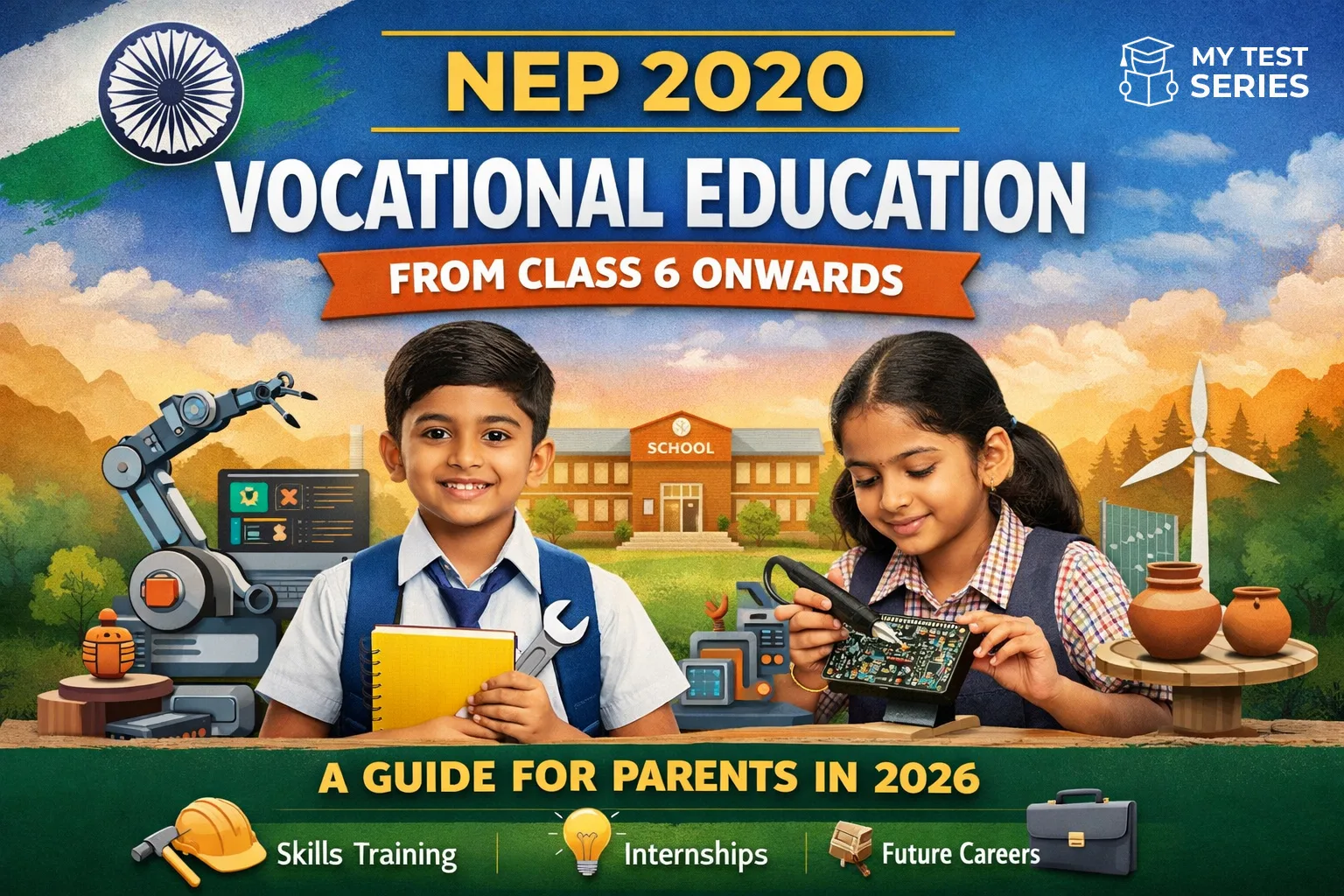
Students from Class 6 onwards will gradually be introduced to activities like:
- Carpentry
- Gardening
- Electric work basics
- Pottery
- Coding and digital skills
- Entrepreneurship basics
- Internships with local professionals
The idea is simple: learning by doing. When students actively practice skills, they develop creativity, confidence, and problem-solving abilities that textbooks alone cannot provide.
Why Vocational Education Starts From Class 6
Introducing vocational education from middle school may seem early, but educational experts believe that ages 11–14 are ideal for discovering interests and talents. Instead of waiting until students complete high school, the NEP encourages early exposure to different fields.
At this stage, students are naturally curious and open to experimentation. Skill-based learning allows them to explore multiple disciplines without academic pressure.
The goal is not to turn students into workers at a young age but to help them understand the value of practical knowledge.
| Traditional System | NEP 2020 Approach |
|---|---|
| Focus mostly on theory | Balance of theory and practical skills |
| Vocational education after Class 10 | Skill exposure from Class 6 |
| Limited career awareness | Early exploration of careers |
| Exam-focused learning | Experience-based learning |
Key Features of Vocational Education in NEP 2020
The vocational education framework in NEP 2020 is designed to integrate practical learning with the school curriculum. This approach ensures that skill development becomes a natural part of education rather than an optional extra.
1. Bagless Days for Practical Learning
One innovative idea introduced by NEP 2020 is “bagless days.” During these days, students participate in workshops, skill training sessions, and hands-on learning activities instead of regular classroom lessons.
Students may visit local workplaces such as farms, workshops, craft centers, or small businesses to understand how different professions work.
2. Short-Term Internships
Students will also have opportunities to participate in short internships with local artisans, technicians, and professionals. These internships help them understand real-life work environments.
3. Multiple Skill Options
Schools will offer multiple vocational options so students can explore various fields rather than being limited to a single skill.
4. Integration with Academic Subjects
Vocational learning will not replace academic subjects like mathematics, science, or languages. Instead, it will complement them by demonstrating how academic knowledge is applied in real life.
Examples of Skills Students May Learn
The exact vocational subjects may vary depending on the region and school infrastructure. However, NEP encourages schools to provide diverse skill exposure.
| Skill Area | Example Activities |
|---|---|
| Technology | Basic coding, robotics, digital design |
| Agriculture | Gardening, soil testing, organic farming |
| Crafts | Pottery, weaving, handicrafts |
| Engineering Basics | Simple electrical work, tool handling |
| Entrepreneurship | Small business ideas, budgeting |
These activities help students build practical intelligence, teamwork skills, and creativity, which are essential in the modern job market.
📚 Explore More NEP 2020 Guides
If you want to understand the New Education Policy 2020 in detail, explore these complete guides:
➤ NEP 2020 vs Old 10+2 System – Major Differences Explained
➤ NEP 2020 Higher Education Reforms – Multidisciplinary Degrees & GER 50%
➤ NEP 2020 Vocational Education From Class 6 – Skills & Internships
➤ How NEP 2020 Has Changed School Education in India (2026 Guide)
➤ NEP 2020 Explained – Understanding the 5+3+3+4 Education Structure
Benefits of Vocational Education for Students
The introduction of vocational education from Class 6 offers several long-term benefits for students.
- Improves practical knowledge and real-world understanding
- Builds confidence through hands-on learning
- Encourages creativity and innovation
- Helps students identify career interests early
- Develops problem-solving and teamwork skills
In the future, employers will value individuals who possess both academic knowledge and practical skills. NEP 2020 aims to prepare students for this evolving workforce.
How This Change Benefits Parents and Families
For parents, vocational education can bring several advantages. It ensures that children do not grow up with only theoretical knowledge but also gain useful life skills.
For example, students who learn financial literacy, digital skills, or basic technical knowledge become more independent and capable of solving everyday problems.
Parents can also observe their child’s natural interests earlier, helping them make better decisions about future education and career paths.
Reality Check 2026: How Much of NEP Vocational Education Is Implemented?
Although the National Education Policy was announced in 2020, its implementation is happening gradually across India. By 2026, many central schools, private institutions, and several state boards have started introducing skill-based education at the middle school level.
However, the level of implementation varies depending on school infrastructure, teacher training, and regional policies.
| Area | Current Status (2026) |
|---|---|
| CBSE Schools | Many schools introduced coding, robotics, and vocational clubs |
| Private Schools | Several institutions adopted project-based learning |
| Government Schools | Gradual introduction through pilot programs |
| Rural Schools | Focus on agriculture, crafts, and local trades |
Despite progress, experts believe that full nationwide implementation may take a few more years due to infrastructure and teacher training requirements.
Challenges Schools Face While Implementing Vocational Education
While the vision of NEP 2020 is ambitious and forward-looking, schools face several practical challenges in implementing vocational education effectively.
1. Lack of Skilled Trainers
Many schools currently lack teachers trained in vocational subjects. Hiring skilled professionals or training existing teachers takes time and resources.
2. Infrastructure Limitations
Activities such as carpentry, robotics, or electrical training require proper labs and equipment, which many schools still need to develop.
3. Awareness Among Parents
Some parents worry that vocational education might distract students from traditional academic subjects. However, NEP emphasizes balance rather than replacement.
4. Curriculum Integration
Integrating skill education with academic subjects requires new teaching methods and curriculum design.
Despite these challenges, the government and educational institutions are gradually building systems to support skill-based education.
What Parents Should Understand About Vocational Education
Parents play a critical role in the success of NEP reforms. Understanding the purpose of vocational education can help families support children effectively.
Here are a few key points every parent should know:
- Vocational education does not replace academic learning.
- It helps students develop practical life skills.
- It allows children to discover their talents early.
- Skill education improves confidence and creativity.
- It prepares students for a future skill-based economy.
Parents should encourage children to participate actively in skill activities rather than viewing them as optional or secondary subjects.
How Vocational Education Helps Future Careers
The modern job market values individuals who possess both academic knowledge and practical abilities. Many global education systems already emphasize skill development alongside classroom learning.
NEP 2020 aims to align Indian education with global standards by preparing students for emerging career fields.
| Skill Developed | Future Career Opportunities |
|---|---|
| Coding & Digital Skills | Software development, AI, data science |
| Entrepreneurship | Startups, business management |
| Technical Skills | Engineering trades, manufacturing |
| Agriculture Skills | Agri-tech, sustainable farming |
| Creative Crafts | Design, handicrafts, creative industries |
Early exposure to these skills helps students build a strong foundation for future career choices.
How Parents Can Support Their Children
Parents can play a supportive role in helping children benefit from vocational education.
- Encourage curiosity and experimentation.
- Support participation in workshops and projects.
- Avoid comparing skill learning with exam scores.
- Help children explore hobbies that may become future careers.
- Discuss practical applications of school subjects in daily life.
When parents treat skill education as valuable learning, children naturally become more enthusiastic about exploring new abilities.
Frequently Asked Questions (FAQ)
Is vocational education compulsory from Class 6?
No, vocational education is introduced as part of exposure-based learning. Students explore different skills but are not forced into specific career paths.
Will vocational subjects affect academic performance?
No. Skill-based learning complements academic subjects and often improves understanding by connecting theory with practical applications.
Will students still prepare for competitive exams?
Yes. The NEP system allows students to continue preparing for traditional academic paths while gaining additional practical skills.
Can vocational education help students start businesses?
Yes. Skills like entrepreneurship, financial literacy, and technical abilities can encourage students to develop innovative ideas and future startups.
Conclusion
The introduction of vocational education from Class 6 under the National Education Policy 2020 represents a major shift in India’s education philosophy. Instead of focusing solely on textbook knowledge, the new approach emphasizes creativity, practical skills, and real-world understanding.
Although implementation challenges remain, the long-term benefits of skill-based education are significant. Students gain confidence, explore diverse career options, and develop abilities that are highly valued in the modern workforce.
For parents, the key takeaway is simple: vocational education is not about pushing children into jobs early. It is about giving them the opportunity to discover their strengths and learn valuable skills that will help them succeed in the future.
As India moves toward a more skill-driven economy, early exposure to vocational learning may become one of the most important reforms shaping the next generation.