What is National Education Policy (NEP)?
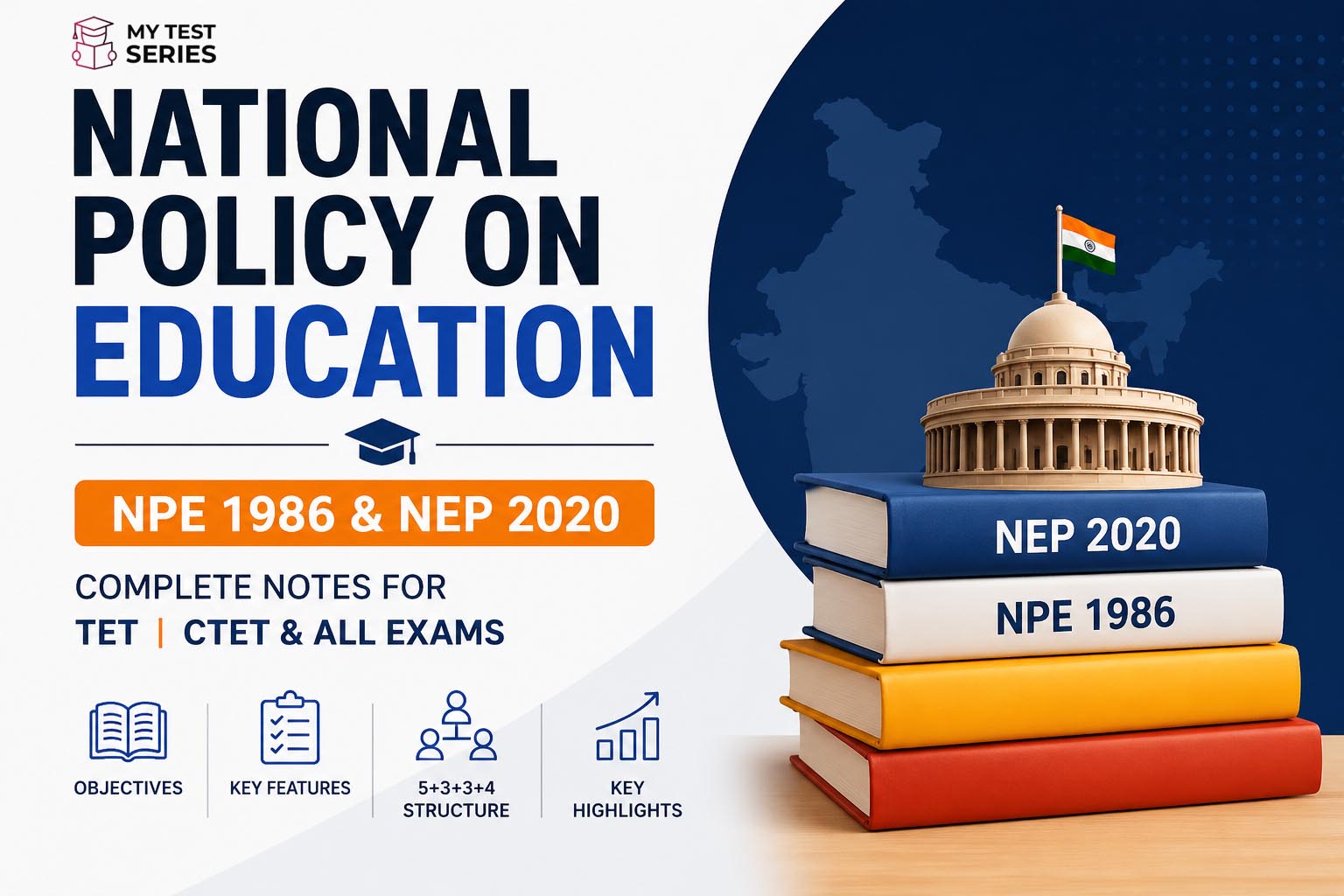
The National Education Policy (NEP) is a comprehensive framework introduced by the Government of India to transform the country’s education system. It provides direction on school education, higher education, skill development, and research.
👉 The latest policy, NEP 2020, replaced the earlier 1986 Education Policy (modified in 1992) after 34 years.
History of Education Policy in India
Understanding the evolution is important for exams:
| Policy Year | Key Focus |
|---|---|
| 1968 | Equal education, three-language formula |
| 1986 | Universal education, teacher training |
| 1992 | Modified version of 1986 policy |
| 2020 | Holistic, flexible, skill-based learning |
Objectives of NEP 2020
- Universal access to education (from preschool to secondary)
- Improve quality and equity
- Promote multidisciplinary learning
- Encourage critical thinking and creativity
- Increase Gross Enrollment Ratio (GER) in higher education to 50% by 2035
Key Features of National Education Policy 2020
1. New School Structure: 5+3+3+4 System
Replaces the old 10+2 system
| Stage | Age | Classes |
|---|---|---|
| Foundational | 3–8 years | Pre-school + Class 1-2 |
| Preparatory | 8–11 years | Class 3-5 |
| Middle | 11–14 years | Class 6-8 |
| Secondary | 14–18 years | Class 9-12 |
2. Focus on Early Childhood Care
- Strong emphasis on Anganwadi + Preschool education
- Learning begins from age 3
3. Mother Tongue as Medium of Instruction
- Teaching in regional language till Class 5 (preferably Class 8)
4. Multidisciplinary Learning
- No rigid separation of streams (Science/Arts/Commerce)
- Students can choose subjects freely
5. Coding & Skill Development
- Coding introduced from Class 6
- Vocational training and internships added
6. Board Exams Reform
- Reduced pressure
- Focus on conceptual understanding
7. Higher Education Reforms
- Multiple entry/exit system:
- 1 year → Certificate
- 2 years → Diploma
- 3 years → Degree
- Academic Bank of Credits (ABC)
8. Teacher Education Reform
- Minimum qualification: 4-year integrated B.Ed
9. Digital Education Push
- Use of technology, online learning platforms
- Digital infrastructure development
NEP 2020 vs Old Education System
| Feature | Old System | NEP 2020 |
|---|---|---|
| Structure | 10+2 | 5+3+3+4 |
| Learning Style | Rote learning | Conceptual learning |
| Subject Choice | Fixed streams | Flexible subjects |
| Skill Focus | Low | High |
| Exams | High pressure | Reduced pressure |
Advantages of NEP 2020
- Holistic development of students
- Promotes creativity and innovation
- Reduces academic pressure
- Better employability through skill development
- Inclusive education system
Criticism of NEP 2020
- Implementation challenges
- Language policy concerns
- Infrastructure gaps in rural areas
- Teacher training issues
Importance for Competitive Exams
NEP 2020 is highly important for:
- CTET / TET
- UPSC
- SSC
- State PCS
👉 Questions are frequently asked from:
- 5+3+3+4 structure
- Features of NEP
- Comparison with old policy
Important MCQs on NEP 2020
Q1. NEP 2020 replaces which policy?
A. 1968 Policy
B. 1986 Policy
C. 1992 Policy
D. None
👉 Answer: B
Q2. What is the new education structure under NEP?
A. 10+2
B. 8+4
C. 5+3+3+4
D. 6+3+3
👉 Answer: C
Q3. Coding is introduced from which class?
A. Class 5
B. Class 6
C. Class 8
D. Class 9
👉 Answer: B
Q4. Minimum teacher qualification under NEP?
A. D.El.Ed
B. B.Ed
C. 4-year B.Ed
D. M.Ed
👉 Answer: C
Q5. GER target in higher education by 2035?
A. 25%
B. 40%
C. 50%
D. 60%
👉 Answer: C
Frequently Asked Questions (FAQ)
Q1. What is NEP 2020?
NEP 2020 is India’s latest education policy aimed at transforming the education system with a focus on flexibility, skill development, and holistic learning.
Q2. What is the 5+3+3+4 system?
It is a new school structure dividing education into four stages based on age and learning levels.
Q3. Why is NEP 2020 important?
It modernizes education, reduces rote learning, and improves employability.
Q4. Is NEP 2020 implemented?
Yes, it is being implemented gradually across India.
📚 Important Education & TET Study Materials
Boost your preparation with these hand-picked study notes, MCQs, and mock tests:
- 👉 CDP Mock Test Bengali
- 👉 Advanced CDP Mock Test
- 👉 Free Daily TET Mock Test
- 👉 Bengali Grammar Mock Test
- 👉 TET Social Science MCQ (Hard Level)
- 👉 Radhakrishnan Commission Notes
- 👉 Complete Test Series Dashboard
- 👉 Child Development & Pedagogy (CDP)
- 👉 All Mock Tests
- 👉 Education Notes & Articles
- 👉 TET Preparation Hub
- 👉 General Knowledge (GK)
- 👉 Current Affairs
- 👉 Previous Year Questions
- 👉 Practice Sets
About the Author
Ranjan Malakar is an education consultant and career mentor specializing in West Bengal recruitment exams, including WBMSC, WBSSC, and WBCS. With over a decade of experience in the academic sector, they provide deep insights into school management, administrative law, and pedagogical trends. Through this blog, Ranjan Malakar aims to empower aspiring Headmasters and Headmistresses with data-backed strategies and the most reliable study resources to excel in their professional journey.